
Planning for your birth isn’t planning for one isolated event. Your birth plan needs to be rooted in the context of planning for the fact that birth is just the start of the rest of your life. It’s a bit like planning your wedding and remembering that you’re not just planning one day but whole marriage.
Your birth and parenting experience is a journey into the great, exciting, unknown.
You can’t control everything, some things will happen that you’re not expecting but you can give yourself the gift of support and knowledge that allows you to not just survive but thrive.
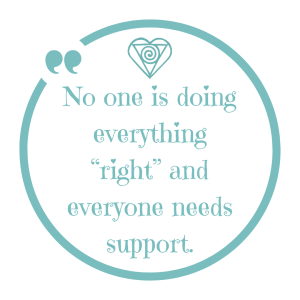
There’s a saying: “It takes a village to raise a child” (which isn’t entirely accurate the village is there to support the parents not take over) and that used to be naturally built into our daily lives. But modern-day parents are increasingly finding themselves coming into parenting with the expectation that it’s all on them. We see parenting reflected in the media and on social media as something done inside a small nuclear family. We get the impression that we’re expected to be able to meet all our children’s needs by ourselves. We’re given the impression, if we’re doing it “right”, we will find that experience blissful and fulfilling. All of this is a myth no one is doing everything “right” and everyone needs support.
We’re increasingly aware of feelings about how our own childhoods were and what we would like to be different for our children. If we’re lucky we have the chance to work on ourselves before we reach the point of becoming parents. So we can approach this time of life with the skills in place that we need to calm ourselves when we feel overwhelmed. Giving ourselves the best chance to recognise when hurts from our childhood are triggered and the self-compassion to coach ourselves through that. But it’s very often the case that we don’t really become aware of what will be challenging for us until we’re in the thick of it. Then it can be really scary to reach out and say I’m finding this hard. It can seem like the people around us have it all together and can cope amazingly with things that seem virtually impossible to us. Our experience in your groups is that when one person has that courage to say “I’m finding this hard” the response from everyone else is “yes, me too and I’m so glad I’m not alone”.
There are two things at work here. One is easy to know in your head but hard to keep reminding yourself emotionally. That is, we only see on social media, a tiny snippet of other people’s lives, the best bits that they choose to share with us. I was talking to someone recently who was telling me about her struggles with postnatal depression. We were talking about how it can often feel that you’re the only one who feels like that and finding people who are willing to share their struggles can be such a lift. But even with the normal ups and downs of family life we really only tend to take photos and certainly to share them when it’s the lovely moments, the ones we want to remember. Finding the honest social media accounts to follow and unfollowing the ones that seem too shiny to be true is an act of self care it’s never too soon to take.
The other thing at work is that the playing field is not even. Some people are struggling less than you are because they have a lot more support built into their lives. For example, we’ve all heard that parenting babies can be tiring because they don’t sleep at night. Our obsession with sleep and often with an unrealistic view of how babies sleep that considers a ‘good’ baby to be one who ‘sleeps through the night’ can lead us to think that people who are not struggling with how little sleep they are getting are doing better than us. But maybe you are having a broken night’s sleep and then doing everything for yourself and your baby and often also for your partner. Maybe you’re non-stop all day and have a baby who won’t be happily put down so you’re doing everything one-handed, even going to the loo. Then when you get two minutes to scroll on social media all you see are pictures of other parents who have the energy and time to take their baby to a coffee shop with a friend and have a lovely chat and a hot coffee while both their babies sleep peacefully in their prams.
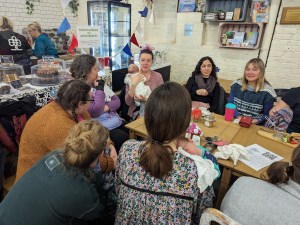
What have they got that you haven’t? The answer is almost certainly a team, a village to raise their baby within. Maybe they have a mum (or a postnatal doula) who has been around that morning with a week’s worth of meals and popped them in the freezer and who ran the vacuum over and put the dishes in the dishwasher and then disappeared off with a load of laundry. All the while cooing over how lovely her grandchild is and how wonderful to see her own child being such a great parent. Maybe they have a group of other parents they can be completely themselves with who provide empathy and solidarity in the group message when they are up in the night or when they’re changing the sheets again because of course nappies only leak at night when you just changed the sheets the day before. This kind of team turns that kind of thing from something that would leave you crying in the shower into something you can laugh about. That kind of team tells you it’s completely okay to not get the other thing you thought would get done today done because actually what you need to do is feed your baby again and that’s okay you’re still awesome and doing great. That kind of team will go to the coffee shop with you and hold your baby while you drink your coffee hot and won’t mind or even notice you haven’t washed your hair today because they also are wearing a t-shirt they have noticed since they left the house has a baby spit up on it. It’s not picture-perfect but it allows you both to get through the day.
This kind of team is within your grasp and easier to gather to yourself if you start while you’re pregnant. It may not be the traditional group of people that are your family and neighbours but that doesn’t make it any less. Maybe your village will include professionals like a breastfeeding counselor, a postnatal doula, a cleaner, a supermarket delivery person. Maybe it will include the people you met at an IPBB meet up or an antenatal class or the people in the What’s App or Facebook Group you joined as long as it’s people who give you a sense of solidarity it will make a difference.
What has any of that got to do with making a birth plan?
If you’ve been around us for more than five minutes you’re not going to be surprised to hear us say a birth plan is not a list of what you need to get done on the day you’re in labour. Making a birth plan is about getting to know yourself and your team better and planning how you can best be supported regardless of the things outside of your control that happen on the day.
Making a postnatal plan, just like a birth plan, has lots of practical elements. But more fundamental, again like with a birth plan, is that it allows you and your support team to get to know each other better.
Planning your birth and planning for your postnatal experience are both wrapped up in planning and preparing your team.
If you’re having a baby as part of a couple making a birth and postnatal plan can start even before you get pregnant. When choosing whether to have a baby with someone you will make your life much easier by choosing to do that with someone who can match your energy and expectations of what it means to be partners as parents and who takes an interest in how they can best support you in any demanding situation including giving birth.
Planning to become parents together is a time to talk about what your values are, what your instincts are around parenting and whether you have matching expectations of what life as parents will be like. You can talk about your own childhood experiences and what you would do the same or differently to your own parents. If you haven’t done this before you got pregnant, during pregnancy is definitely the time to start. It can be very challenging if mismatched expectations take you by surprise during your birth or once your baby is here.
If you’re choosing to be a single parent, your postnatal planning also can start before you get pregnant or (if your pregnancy was not planned) may also need to be done as soon as you can during pregnancy. You will be even more aware of how much you need to put together your support team not just for the birth but for your whole parenting journey. Who can offer emotional support, and who will be there for you practically?
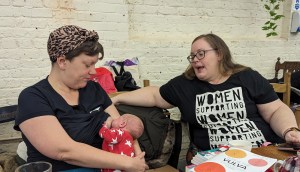
Whether you’re a single parent or part of a couple your birth and postnatal planning time is a really good time to look into the benefits of “alloparents” for you and your baby and who those people will be for your new little family. This article is a good starting point to read more about what that means and why it matters.
Being a new parent is often exhausting and overwhelming and finding support at the time will be much more challenging than if you’ve made a plan beforehand. The people who support you don’t have to be related to you, you can choose your own family from among your friends and you can be prepared in case you need professional support such as feeding support or mental health support. Researching people who fit your vibe is easy to do during pregnancy and it may be life-saving to have their number to hand when your baby is in your arms.
Add us to your village.
If you would like to meet people who could potentially be part of your team for pregnancy, birth and beyond please come along to our meet-ups. In-person in South East Hampshire and from anywhere and everywhere online. Check out the details on the meet-ups page of our website.
 Informed Pregnancy, Birth and Beyond.